


TL;DR:
- The abundance of data science blogs makes identifying valuable sources challenging amid rapid technological changes in 2026.
- Prioritizing blogs based on role, relevance, author credibility, and recent updates ensures meaningful learning and practical application.
The sheer volume of data science blogs available today makes finding genuinely useful ones feel like a search problem with no clean solution. New tools, shifting priorities, and the rise of agentic AI mean that what was worth bookmarking two years ago may now be outdated noise. AI and data science trends like GenAI infrastructure, autonomous agent orchestration, and AI governance are reshaping the field so fast that your reading list needs to keep pace. This guide cuts through the options, giving you a curated, opinionated breakdown of which data science blogs are worth your time in 2026 and exactly how to use them.
Table of Contents
- Key takeaways
- 1. How to evaluate data science blogs before you subscribe
- 2. Data engineering and infrastructure blogs
- 3. Beginner and career transition blogs
- 4. AI, machine learning, and specialized research blogs
- 5. Business intelligence and data strategy blogs
- 6. Data visualization and storytelling blogs
- 7. Comparison table: matching blogs to your needs
- 8. Situational recommendations by role and goal
- My honest take on reading data science blogs effectively
- How Blueprysm supports your data and AI strategy
- FAQ
Key takeaways
| Point | Details |
|---|---|
| Match blogs to your role | Engineers, ML specialists, and executives need different content. Segment your reading list accordingly. |
| Prioritize current coverage | Blogs that actively cover AutoML, LoRA fine-tuning, and MLOps reflect 2026 skill priorities. |
| Use the comparison table | The side-by-side breakdown in this article helps you quickly identify blogs that fit your career stage. |
| Depth beats volume | Reading three high-quality data science articles weekly outperforms skimming twenty shallow posts. |
| Pair reading with practice | Blog insights only stick when you apply them. Build time for hands-on experimentation alongside your reading. |
1. How to evaluate data science blogs before you subscribe
Not every blog that ranks well deserves your attention. A rigorous evaluation framework saves you from the trap of following high-traffic sources that recycle the same introductory content forever.
Here is what actually matters when assessing top data analytics blogs:
- Author credibility: Is the author an active practitioner, researcher, or analyst? Look for professional bios, LinkedIn profiles, or papers linked from the blog. Anonymous “content team” bylines are a red flag.
- Relevance to your role: A data engineer focused on pipeline architecture needs different content than a machine learning engineer working on model fine-tuning. Segment your criteria by role before you evaluate.
- Coverage of modern tools and concepts: Data science in 2026 prioritizes analytical depth, AutoML, and RAG architectures alongside Python. Blogs that still center pure coding tutorials without contextualizing them to modern workflows are running behind.
- Update frequency and recency: A blog that published ten posts in 2023 and went quiet is a dead end. Check the timestamp on the five most recent articles.
- Balance of tutorial vs. thought leadership: The best blogs blend hands-on tutorials with perspective pieces. Either extreme alone makes for an unbalanced diet.
- Community engagement: Active comment sections, Discord links, or newsletter replies signal that the author is genuinely connected to their readership.
Pro Tip: Before subscribing to any blog, read three articles end-to-end and ask yourself one question: did I learn something I could apply tomorrow? If not, skip it.
2. Data engineering and infrastructure blogs
If your work sits closer to pipelines, data modeling, and infrastructure, this category is your core reading. Top data analytics blogs for 2026 in this space include Seattle Data Guy and the dbt Blog, both of which have earned reputations for practitioner-grade content rather than surface-level explainers.
Seattle Data Guy, run by Benjamin Rogojan, goes deep on modern data stack architecture, cloud engineering trade-offs, and career realities for data engineers. His content reads like advice from a senior colleague who will actually tell you what does not work, not just what should work in theory. The dbt Blog complements this nicely with content on analytics engineering, data transformation best practices, and community-driven case studies.
The Skyvia Blog also makes this list for professionals who work across data integration and ETL workflows. It covers practical use cases for cloud data connections, which is increasingly relevant as more teams manage multi-source architectures. For anyone building or maintaining data infrastructure, understanding data foundry concepts is a smart companion read alongside these engineering blogs.
3. Beginner and career transition blogs
If you are entering the field or pivoting from another discipline, the wrong blog can waste months of your time. You need content that connects foundational concepts to job-market realities, not just academic theory.
KDnuggets, Towards Data Science, and CareerFoundry stand out here. KDnuggets has been running since the mid-1990s and has evolved well. Its editorial mix now covers practical tutorials, salary reports, and tool comparisons that give career switchers a realistic map of the field. Towards Data Science, hosted on Medium, has a massive contributor base, which means quality varies. The trick is to filter by author reputation rather than just topic.
CareerFoundry speaks directly to people considering a career change, covering bootcamp comparisons, portfolio building, and first-job realities alongside technical content. That combination is rare and genuinely useful for early-stage learners.
“The best beginner blogs do not just teach you syntax. They show you what the job actually looks like, what tools employers use, and what gap exists between a tutorial certificate and a first data science role.”
4. AI, machine learning, and specialized research blogs
This is where the field gets both exciting and overwhelming. The pace of change is real. New techniques like LoRA and F-DPO are already reshaping how teams fine-tune large language models and reduce hallucinations, and the blogs covering this space need to move as fast as the research.
Analytics Vidhya has built a large community around ML tutorials and competition walkthroughs, making it a reliable source for applied technique coverage. The Modern Data Stack Substack covers tooling shifts and vendor trends in a way that saves you from tracking a dozen separate product blogs. For pure research depth, the Distill.pub archive (though less frequently updated now) remains one of the best examples of what a technical blog can be: rigorous, visual, and genuinely educational.
Emerging AI trends in autonomous agent orchestration and GenAI infrastructure mean that the best ML blogs in 2026 are not just covering model benchmarks. They are covering AI governance and oversight, which reflects how the data scientist’s role has shifted toward MLOps and AI supervision rather than pure model building.
5. Business intelligence and data strategy blogs
Not everyone reading data science articles is writing code. A significant audience sits in leadership, product management, or strategy roles where the priority is understanding what data can do for the business, not how to build a pipeline from scratch.
Forrester’s Big Data Blog and Gartner’s analytics coverage speak directly to this audience. Both prioritize strategic context, enterprise technology decisions, and analyst perspectives on market direction. The writing tends toward formal and structured, which suits executives who need defensible frameworks rather than informal hot takes. Leadership roles managing data and AI are at record highs in large enterprises, and these blogs serve exactly that audience.
For a more opinionated, practitioner-meets-strategy angle, the MIT Sloan Management Review’s technology section is consistently worth reading. It covers the intersection of data science, organizational change, and competitive strategy in a way that neither pure tech blogs nor pure business publications manage well.
6. Data visualization and storytelling blogs
You can have the best model in the room and still lose the argument if you cannot communicate what it means. Visualization is not a soft skill. It is how data science creates organizational impact.
FlowingData, run by Nathan Yau, is the gold standard here. Yau combines beautiful design with statistical rigor, and his tutorials on R-based visualization are some of the clearest available anywhere online. Storytelling with Data, the blog companion to Cole Nussbaumer Knaflic’s book, offers structured guidance on chart selection, audience design, and the principles that separate a clear chart from a confusing one.

Both blogs complement technical skills in a way that most data science resources neglect. If your team’s dashboards get ignored in meetings, add one of these to your reading rotation.
7. Comparison table: matching blogs to your needs
| Blog | Specialty focus | Audience level | Update frequency | Best for |
|---|---|---|---|---|
| Seattle Data Guy | Data engineering, pipelines | Intermediate to advanced | Weekly | Data engineers, architects |
| dbt Blog | Analytics engineering | Intermediate | Bi-weekly | Analytics engineers |
| KDnuggets | Broad data science | Beginner to intermediate | Daily | Career switchers, generalists |
| Towards Data Science | ML, Python, career | All levels | Daily | Anyone building core skills |
| Analytics Vidhya | ML tutorials, competitions | Intermediate | Daily | ML practitioners |
| Forrester Big Data Blog | Strategy, enterprise | Executive | Monthly | Data leaders, executives |
| FlowingData | Visualization, statistics | Intermediate | Weekly | Analysts, communicators |
| Storytelling with Data | Chart design, communication | All levels | Monthly | Analysts, presenters |
| MIT Sloan Tech | AI strategy, leadership | Executive | Weekly | Strategy and leadership roles |
8. Situational recommendations by role and goal
Knowing which blogs exist is half the battle. Knowing which ones to prioritize given your specific situation is where most people get stuck.
- Data engineers: Start with Seattle Data Guy and the dbt Blog for applied pipeline content. Add the Skyvia Blog for integration-specific challenges. Skip the ML-heavy sources until you have infrastructure fundamentals locked down.
- ML engineers and AI specialists: Analytics Vidhya for applied technique, MIT Sloan for governance context, and a curated Towards Data Science author list for research-adjacent content. Track how data scientists now orchestrate autonomous agents and govern AI systems, because that is where the role is heading.
- Beginners and career switchers: KDnuggets and CareerFoundry are your starting points. Do not skip the career content sections. Understanding what employers want right now is as important as understanding what logistic regression is.
- Business and strategy roles: Forrester, Gartner analytics coverage, and MIT Sloan. These are not the most exciting reads, but they are the ones that will sharpen your thinking about data-driven decision-making at the organizational level. Check real-world AI applications for SMEs to ground the theory in something concrete.
- Visualization-focused professionals: FlowingData first, Storytelling with Data second. Both reward sustained reading over time far more than a single visit.
Pro Tip: The importance of domain expertise over automation means your reading list should include at least one blog that challenges conventional wisdom in your specialty, not just reinforces it.
My honest take on reading data science blogs effectively
I have followed data science blogs long enough to recognize the pattern that burns people out. You subscribe to twelve sources, spend ninety minutes a week in an overflowing RSS feed, read the first three paragraphs of everything, and retain almost nothing.
What I have learned is that five focused subscriptions beat twenty unfocused ones every time. I look for blogs where the author is clearly writing from experience rather than for traffic. The domain knowledge principle resonates with me personally. Choosing the right analytical method for a business question requires judgment that automation cannot replicate, and blogs that acknowledge this are worth far more than ones that treat every new tool as a silver bullet.
I also pay attention to what blogs do not cover. A blog that never mentions failure, trade-offs, or situations where the “correct” approach still produced bad outcomes is probably performing expertise rather than sharing it. The blogs that have stayed on my list longest are ones where the author occasionally says “this did not work the way I expected.”
My other filter is whether the blog is keeping pace with how AI supervision and MLOps are becoming central to the data scientist role. If a blog is still framing the job as primarily model building, it is stuck in 2022. The field has moved. Your reading list should move with it.
Experiment. Rotate sources seasonally. And if a blog starts feeling like homework, that is a signal, not a reason to push through.
— Colin
How Blueprysm supports your data and AI strategy
Reading great data science articles builds knowledge. Turning that knowledge into competitive decisions is where most professionals hit a wall.
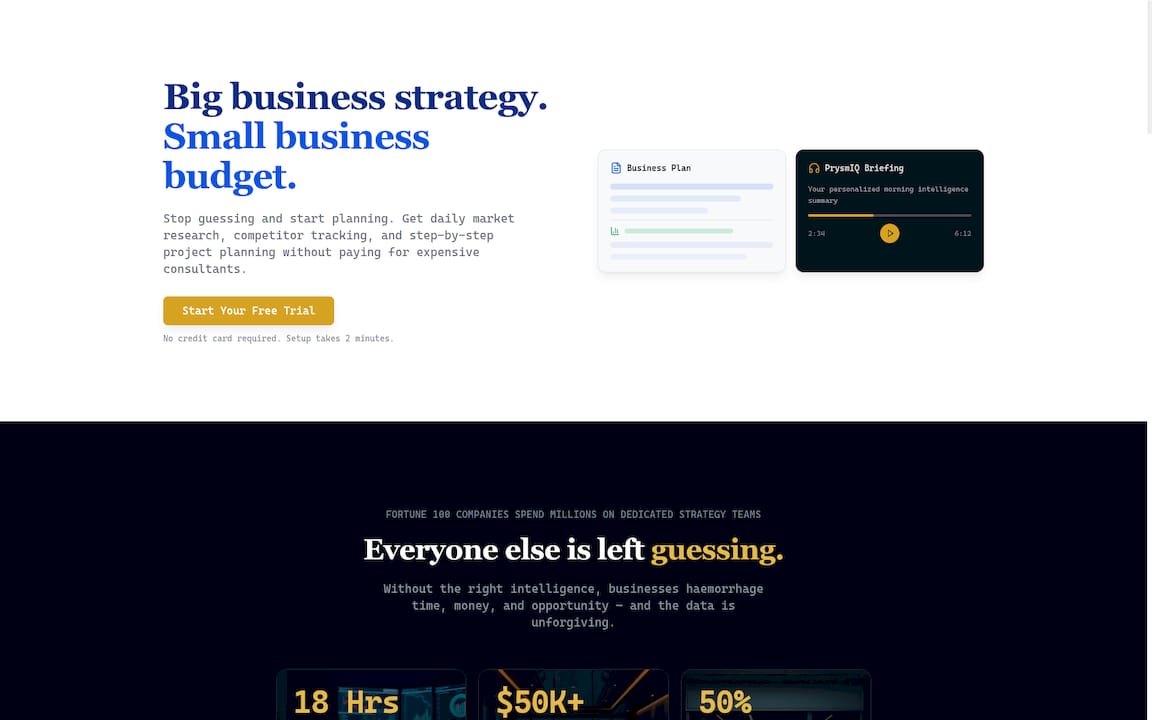
Blueprysm is built for exactly that gap. The platform delivers AI-powered market intelligence, competitor monitoring, and strategic planning tools that translate the trends you read about into concrete business decisions. Whether you are tracking how GenAI infrastructure affects your sector or validating a new data-driven initiative, Blueprysm gives you the analytical framework that expensive consultants used to gatekeep. You can explore how it all works on the Blueprysm platform page, or test your content’s credibility assumptions with the Puffery Detector. The insights are there. The tools are ready. It is time to use them.
FAQ
What makes a data science blog worth following in 2026?
The best data science blogs combine practitioner credibility, current tool coverage (AutoML, RAG, MLOps), and a balance of tutorials with strategic perspective. Blogs that cover AI governance and autonomous agent workflows reflect where the field is actually headed.
Which blogs are best for beginners entering data science?
KDnuggets, Towards Data Science, and CareerFoundry are consistently recommended for beginners because they connect foundational concepts to real job market requirements, not just theory.
How many data science blogs should I follow at once?
Five to seven focused subscriptions produce better learning outcomes than following twenty sources loosely. Quality of engagement matters more than the size of your reading list.
Are business intelligence blogs different from data science blogs?
Yes. Business intelligence blogs like Forrester’s Big Data Blog and Gartner’s analytics coverage prioritize enterprise strategy and leadership context, while core data science blogs focus on technical methods, tools, and practitioner skills.
How do I start a data science blog of my own?
To start a data science blog, pick a narrow specialty rather than trying to cover everything, write from direct experience rather than summarizing others, and publish consistently before optimizing for traffic. Specificity and authenticity are what separate the blogs that build real audiences from the ones that disappear after six months.
Recommended
- Unlocking competitive advantage with emerging AI trends – Blue Prysm – Articles & Blogs
- Data foundry explained: A guide for smart business leaders – Articles & Blogs
- Data-Driven Strategy Examples for SMEs: Real-World Wins – Blue Prysm – Articles & Blogs
- Top 6 blueprismai.com Alternatives 2026 – Blue Prysm – Articles & Blogs