


A platform-delivered fractional chief strategy officer makes sense for most SMBs that need continuous market intelligence, structured roadmaps, and execution follow-through without carrying a part-time executive’s retainer. The right setup gives you three things on a predictable schedule: live market and competitor intelligence, roadmaps built from proven strategy frameworks, and cadence-driven execution support that catches drift before it becomes a missed quarter.
TL;DR:
- Real-time market and competitor data should seamlessly integrate into your existing tools rather than being confined to isolated dashboards or PDFs.
- A platform that includes more than 95 strategy frameworks can turn diagrams into actionable roadmaps with clear owners and deadlines, not just visualizations.
- Most pilots can be scoped, built, and show measurable improvements within four weeks, with decision velocity and OKR progress evident by the first quarter.
- A pilot requires a dedicated data owner, a clear scope focused on one high-priority use case, and a fixed timeline with an executive sponsor committed to reviews.
- Using a hybrid approach with a platform for strategic rigor and a short-term advisor for influence maximizes value without sacrificing cost predictability.
What Is a Fractional Chief Strategy Officer in This Context?
Here, a fractional chief strategy officer is not a part-time human executive splitting time across three companies. It is an AI-assisted platform paired with project consulting that delivers the outputs a strategy officer would produce: market reads, competitive positioning, a working roadmap, and a rhythm for keeping teams accountable to it. Some vendors still sell the human-retainer version. This article is about the software-plus-project model instead.
The buyer profile is specific. This fits SMBs typically running somewhere between a few million and low tens of millions in revenue, where the founder or CEO is currently doing strategy work in the margins of their calendar, and where marketing or operations leaders need CSO-grade input but there’s no budget or appetite for a six-figure hire.
What it solves, compared to hiring a retainer executive:
- Continuous intelligence instead of a quarterly check-in that goes stale by week three
- Faster decision cycles because data and recommendations sit in one place instead of scattered slide decks
- A predictable subscription-plus-project cost shape instead of negotiating a retainer that scales with scope creep
Small businesses often fail at strategy not from lack of frameworks but from applying corporate-scale plans to teams with founder-level constraints on cash and time. A platform model that adapts frameworks to those constraints, rather than importing them wholesale, is what actually holds up under real conditions.
What Capabilities Should You Expect From the Platform?
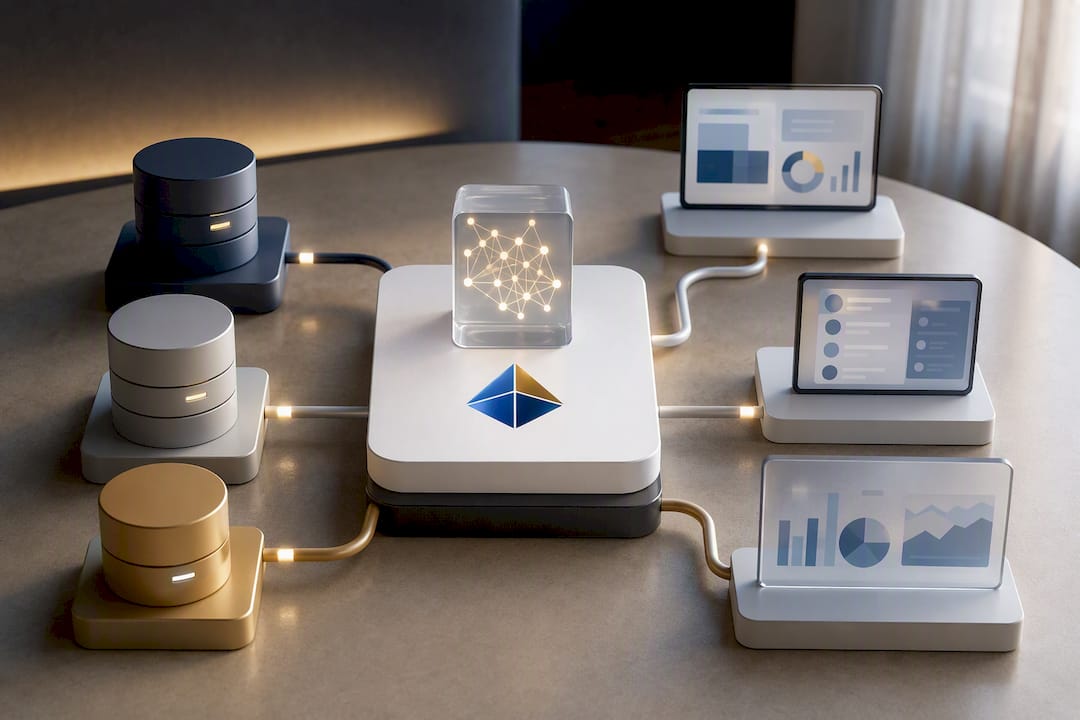
The core deliverable is intelligence that doesn’t sit in a PDF. Real-time market and competitor monitoring should flow into whatever your team already checks daily, whether that’s a Power BI dashboard, a Slack channel, or a CRM view, rather than living in a separate tool nobody opens twice.
Second is the strategy layer itself. A platform worth paying for ships with a library of proven models. Blue Prysm’s version includes more than 95 frameworks, from SWOT and Porter’s Five Forces to the Business Model Canvas, and the point isn’t the framework count. It’s whether the platform turns a framework into a working roadmap with owners and dates attached, instead of leaving you with a diagram and no next step.
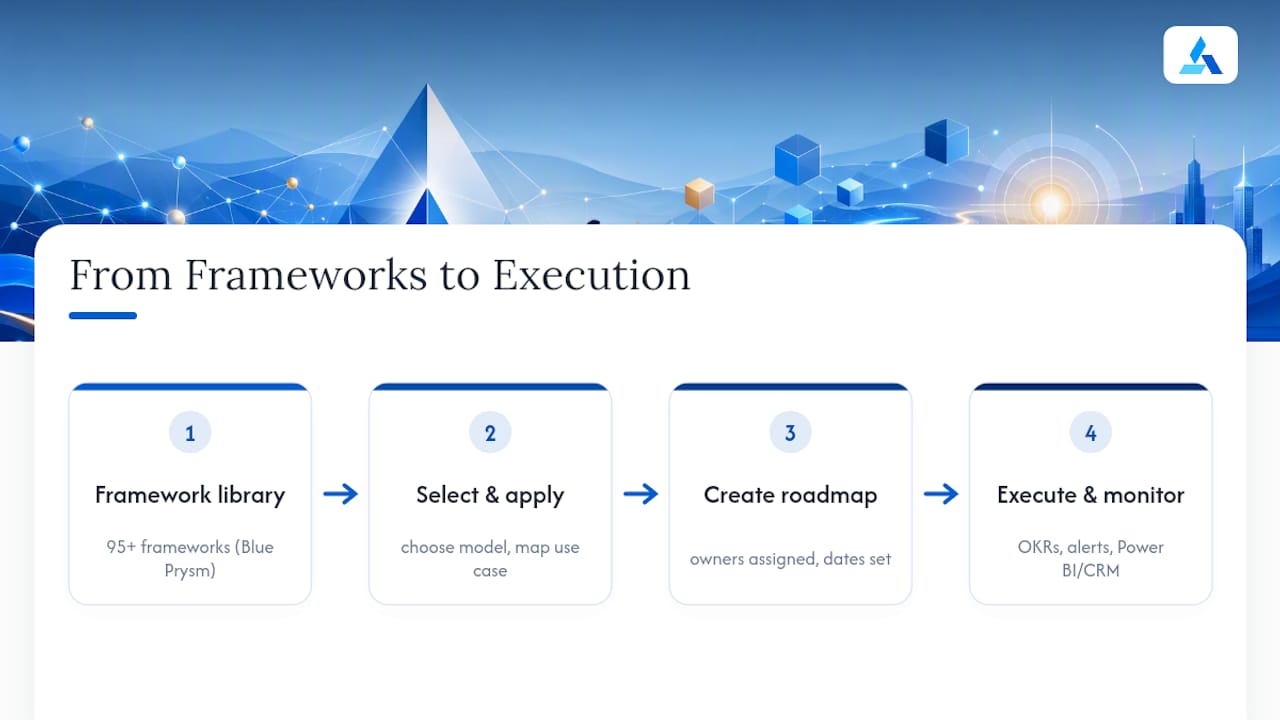
Third is execution tooling. This means OKR and cadence planning, automated alerts when a priority starts drifting off schedule, and dashboards that show progress without someone manually updating a spreadsheet every Friday. AI-enabled planning platforms earn their keep here by turning objectives into measurable goals and surfacing corrective actions before a quarter is lost.
On integration: the useful platforms connect to Power BI, your CRM, and your ERP without demanding a data cleanup project first. For most mid-market companies, AI strategic planning builds on top of existing data infrastructure rather than replacing it, which is the only realistic way an SMB adopts this without a six-month IT detour.
Pro Tip: Ask any vendor to show you a live alert or dashboard from an existing client before you sign anything. If they can only show mockups, that’s your answer about what “real-time” actually means in their product.
How Does a Fractional CSO Engagement Actually Work?
Every credible engagement starts narrow. Here’s the typical sequence:
- Pilot first. A prototype scoped to one high-friction workflow, such as competitor pricing alerts or forecast accuracy on your top product lines, with agreed success criteria and a specific artifact delivered at the end, typically within a few weeks.
- Connect existing systems. The platform plugs into Power BI or your current BI model, CRM, and ERP. You don’t need clean data everywhere, just a defined slice worth building on.
- Set the cadence. Weekly or biweekly reviews, OKR check-ins, and automated drift alerts replace the once-a-quarter strategy meeting that everyone forgets by the next one.
- Divide the work. The platform generates the intelligence and dashboards; project consulting handles framework selection and roadmap design; your leadership team owns the decisions and the follow-through.
Strategy execution most often breaks down when planning cycles built for large corporations get forced onto lean SMB teams. Shifting to cadence-based execution is what actually converts a plan into daily behavior instead of a document nobody reopens.
A working prototype inside an existing BI model can often be delivered within two weeks, with visible improvements to planning speed showing up inside the first quarter, according to guidance from P3 Adaptive on AI strategic planning. That’s the benchmark to hold any vendor to. If they can’t scope something that tight, they’re selling you a consulting engagement dressed up as software.
What Should the Rollout Checklist and Timeline Look Like?
Before you sign anything, confirm four things exist: an executive sponsor who will actually show up to reviews, one priority use case (not five), a named data owner on your side, and a pilot scope written down with a defined end date.
The realistic timeline looks like this:
- Weeks 1 to 4: Pilot build and first data connections
- First quarter: Measurable impact on the one use case you picked following the pattern of narrow, pilot-first programs that prove value before expanding
- Month 3 onward: Standard cadence, with OKR reviews and dashboards running without heavy manual intervention
Commercial shapes vary, but expect some combination of a pilot fee, a subscription tier for ongoing platform access, and project blocks for consulting work like framework selection or team training. Some vendors bundle training as a separate curriculum tier.
Pro Tip: Watch for vendors who won’t commit to a fixed pilot price or a defined end date. An open-ended “we’ll scope as we go” pilot is a retainer in disguise, and it defeats the entire cost-predictability advantage this model is supposed to give you.
Red flags worth walking away from: no named data owner required from you (meaning they have no real integration plan), a pilot that’s actually a 90-day sales cycle, or a proposal that talks entirely about frameworks and never mentions cadence or ownership.
How Do You Measure Success in a 90 to 180 Day Pilot?
Track leading indicators first, because lagging revenue numbers take longer to show up. Watch:
- Decision velocity: how many days between a market signal appearing and a decision getting made
- Percentage of priorities with a named owner and a date, not just a line item on a roadmap
- OKR progress tracked weekly instead of discovered at quarter-end
- Forecast accuracy improvement on whatever metric you scoped in the pilot
Lagging signals follow: revenue or margin impact tied specifically to the initiatives you prioritized, plus any resource savings from cutting work that wasn’t moving the needle. Instrumenting this doesn’t require new infrastructure. Most of it comes from the same BI connection you set up during the pilot. For an SMB, a realistic expectation is visible movement on decision velocity and OKR completion inside the first quarter, with revenue impact following in the two quarters after that.
When Should You Choose a Platform Over a Human Executive?
The platform-plus-project model wins when what you actually need is continuous data, fast iteration, and a cost structure you can predict twelve months out. It’s the right call for most SMBs still running strategy off gut feeling and a shared spreadsheet.
A human executive earns their premium when the job is really about influence: board management, investor relations, or navigating a boardroom fight where someone needs to be in the room reading the temperature. No dashboard replaces that.
The honest middle ground, and the one I’d point most founders toward, is hybrid: a short retained advisor for the political and relational work, paired with a platform handling the strategic intelligence and execution grind underneath it. You get judgment where judgment matters and rigor everywhere else.
— Colin Bowdery
See What Blue Prysm’s Platform Actually Delivers
This platform model addresses the gap described in this article: continuous market intelligence, a strategy library with numerous frameworks, and OKR cadence planning, all aiming to avoid the cost or scheduling friction of a part-time executive hire.
If you’ve read this far, you already know the outputs you need: competitor tracking that updates without a quarterly manual pull, roadmaps built from tested frameworks rather than a blank whiteboard, and real-time analysis feeding a dashboard your team actually opens. Blue Prysm’s market research tools and market analysis platform are built to run the pilot-first model outlined above, starting narrow on one use case and expanding once it proves out. If you’re weighing this against a part-time hire, the fastest way to know if it fits is to see it running on your own data. Start a pilot conversation and get a working prototype scoped to your highest-friction workflow within weeks, not quarters.
Research and Resources Worth Your Time
- The leadership gap: understanding strategy execution failure, on why cadence-based execution beats static planning cycles
- Using AI for strategic planning: a complete guide, on building prototypes inside existing BI infrastructure
- Resource-poor, risk-rich, on adapting frameworks to founder-level constraints
- Strategic Planning Best Practices for Business Leaders, on closing the gap between strategic intent and follow-through
- AI Business Planning for SMBs: A Pilot-First Roadmap, for a step-by-step view of the pilot approach described above
Sources
- The leadership gap: understanding strategy execution failure
- Using AI for strategic planning: a complete guide
- Real-Time Market Intelligence: What it is and how it works
FAQ
What Does “Fractional Chief Strategy Officer” Mean in This Model?
It refers to an AI-assisted platform and project consulting delivering CSO-level market intelligence, roadmaps, and execution support, not a part-time human executive on retainer.
How Fast Can a Pilot Show Results?
A scoped pilot inside existing BI infrastructure can be built in two to four weeks, with measurable impact often visible within the first quarter.
Do I Need Clean Data Before Starting?
No. The platform connects to your existing Power BI, CRM, or ERP setup and builds from a defined slice of data rather than requiring a full cleanup first.
What Does This Cost Compared to a Retainer Executive?
Expect a subscription for platform access plus project-based fees for consulting and training, which tends to be more predictable over a year than a scaling retainer.
How Do I Know if a Vendor’s Pilot Claims Are Real?
Ask for a live dashboard or alert from an existing client, not a mockup, and confirm the pilot has a fixed price and a defined end date before you sign.