


Sorting through media intelligence platforms to monitor brand presence and campaign impact wastes hours on feature gaps and unclear pricing. Many tools hide real-time alerts, AI summaries, and deep media coverage behind price walls or force a sales call to see archive depth and export options. This comparison spotlights four direct alternatives to Meltwater.com so communications and marketing teams can match features and pricing to their reporting demands.
Table of Contents
Blue Prysm
At a Glance
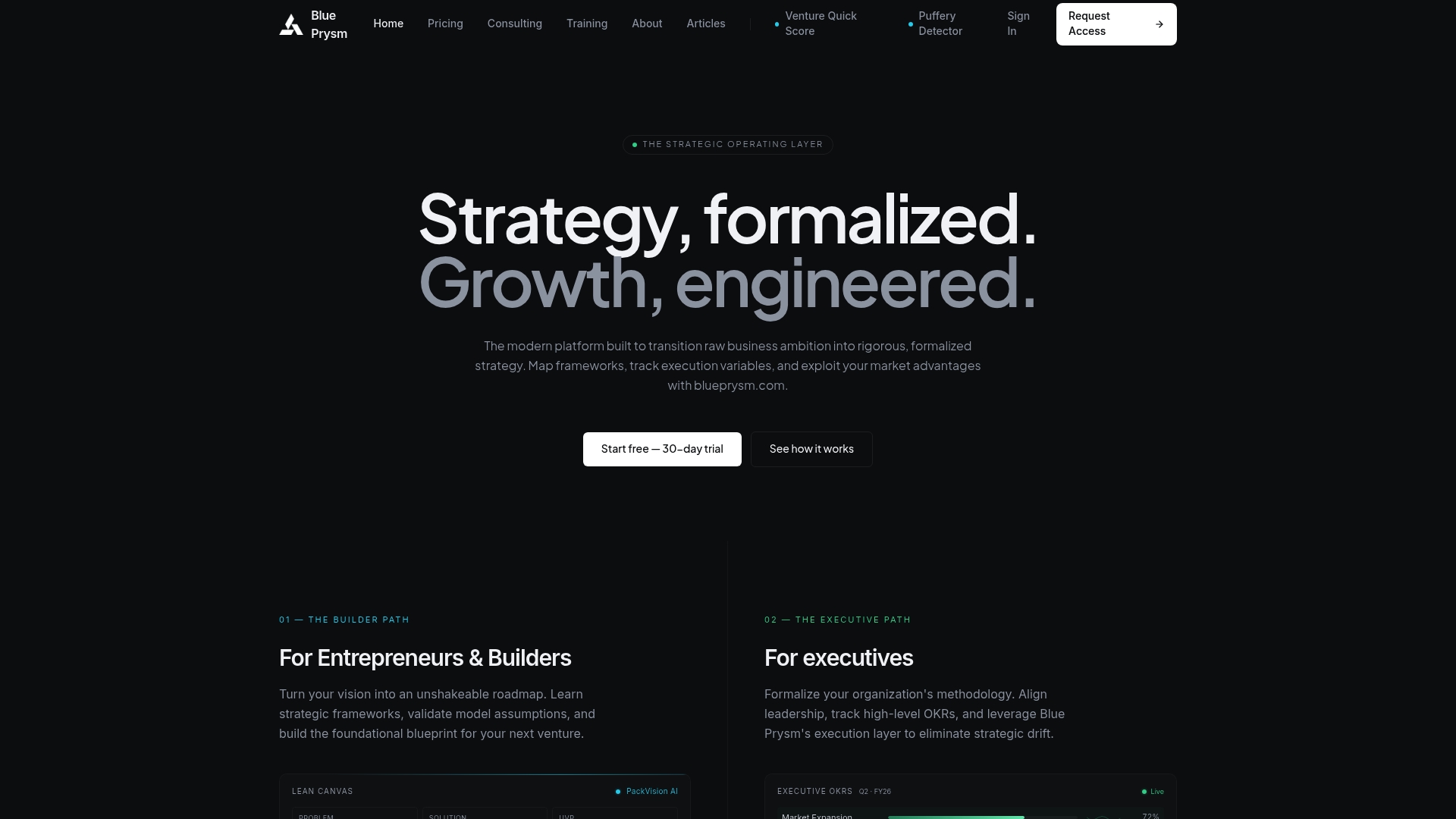
Free access with no account required. According to the company, Blue Prysm holds SOC 2 certification and enforces zero data retention policies. The platform couples institutional strategy frameworks with AI driven analysis to help teams convert informal plans into tracked initiatives and measurable outcomes.
Core Features
Blue Prysm includes formal strategy templates such as Porter’s Five Forces and Blue Ocean Strategy, plus modules to translate corporate vision into measurable OKRs and KPIs. Its analytical suite covers market gap analysis, competitor profiling, and growth optimization while the Puffery Detector checks the credibility of web claims. The platform also offers venture scoring with Venture Quick Score, a strategy library, real time market briefings, and competitor monitoring.
Key Differentiator
The platform’s main edge lies in combining institutional grade frameworks with AI driven analytical tools to convert raw business ambition into formal strategy. That pairing focuses on moving teams from loose ideas to documented plans, tracked metrics, and repeatable reviews.
Pros
Blue Prysm centralizes standard strategic methods and execution tools so teams do not stitch together multiple spreadsheets and slide decks. The presence of Puffery Detector and Venture Quick Score helps filter weak claims and triage new ideas early. The vendor advertises SOC 2 certification and zero data retention, which signals a strong attention to security practices. Vendor testimonials report cost savings and improved operational metrics for customers who adopt its recommended workflows.
Cons
- Steep learning curve for teams new to formal strategy frameworks or AI based assessments. Training improves effectiveness but adds initial overhead.
Who It’s For
Business leaders, entrepreneurs, and executives who need a disciplined way to craft and track strategy will find this platform useful. Teams that already use formal frameworks or want to adopt OKR based tracking will gain the most. Organizations seeking a security conscious tool for market intelligence also align well with the product.
Unique Value Proposition
The Puffery Detector combined with venture scoring lets you triage opportunities before committing resources. That capability reduces time spent on weak leads and helps prioritize initiatives with the clearest strategic signal. For small and medium companies, this shifts effort from guesswork to documented decisions tracked across quarters.
Real World Use Case
A venture builder maps a business model, runs the Venture Quick Score to test assumptions, and uses the Puffery Detector to vet partner claims. They convert validated hypotheses into OKRs and use the market briefings to adjust priorities each quarter. The result is a single playbook for validation, execution, and review.
Pricing
The product lists a free plan with no account required. That model makes it possible to try core features and detectors without a subscription. Paid tiers or enterprise pricing are not publicly listed in the product details.
Website: https://blueprysm.com
Determ
At a Glance
AI generated media coverage summaries arrive alongside real time alerts and automated reports. The platform includes historical media data and exports to API, Excel, PDF, and PowerPoint. That combination helps PR and communications teams move from detection to reporting faster.
Core Features
Determ pairs continuous media monitoring with AI driven sentiment analysis and AI generated summaries to reduce manual triage. It tracks online and social channels, supports multilingual sentiment, and offers filtering, search, and media impact metrics. Automated dashboards and multiple export options let teams build reports without rebuilding datasets.
Key Differentiator
The clear differentiator is AI generated summaries combined with real time alerts. That pairing lets teams identify emerging issues, read concise coverage summaries, and route the right items to stakeholders quickly. For firms that need fast triage and repeatable reporting, that work pattern reduces time spent on raw clipping.
Pros
Faster crisis reaction times and early detection reduce the window between a mention and a response. AI driven summaries and automated reporting cut the time analysts spend reading full articles and assembling decks. The vendor advertises transparent pricing and scalability, and the platform covers multiple languages and historic trends for longer term analysis.
Cons
- Potentially complex setup for new users due to extensive features. Some technical configuration appears required before teams see full value.
- Limited detail on specific integration capabilities beyond the API. That makes evaluating end to end workflows harder.
- No explicit mention of customizable dashboards or user interface specifics. Teams wanting ready made dashboards may need to build templates.
- Pricing information is linked but not listed directly on the page. That means you must request or follow the pricing link to get costs.
When It May Not Fit
Teams that lack an internal technical resource may struggle with initial configuration and API usage. Organizations that require an off the shelf, highly customized dashboard out of the box could find the UI options unclear. If you need upfront list pricing visible without clicking a vendor page, this product may not match that preference.
Notable Integrations
Determ exposes a Media monitoring API for exports and system connections. The API supports data pulls for Excel, PDF, and PowerPoint workflows. No additional named third party integrations are listed.
Who It’s For
PR, communications, and marketing teams that need fast, AI powered monitoring and reporting will get the most from Determ. Media analysts and agencies that must handle multiple languages and historical trend work also fit. Smaller teams that can tolerate an initial setup step can scale into the platform.
Real World Use Case
A global PR agency uses Determ to monitor client coverage across online and social channels, receive instant alerts on emerging risks, and generate stakeholder reports. The agency shortens its reporting cycle by relying on AI summaries and direct exports into client deliverables. That saves analyst hours each reporting period.
Pricing
Pricing details are available on the vendor pricing page. The product data links to a pricing URL rather than listing specific tier costs. Prospective buyers must follow the pricing link or contact the vendor for quotes.
Website: https://determ.com
BrandMentions
At a Glance
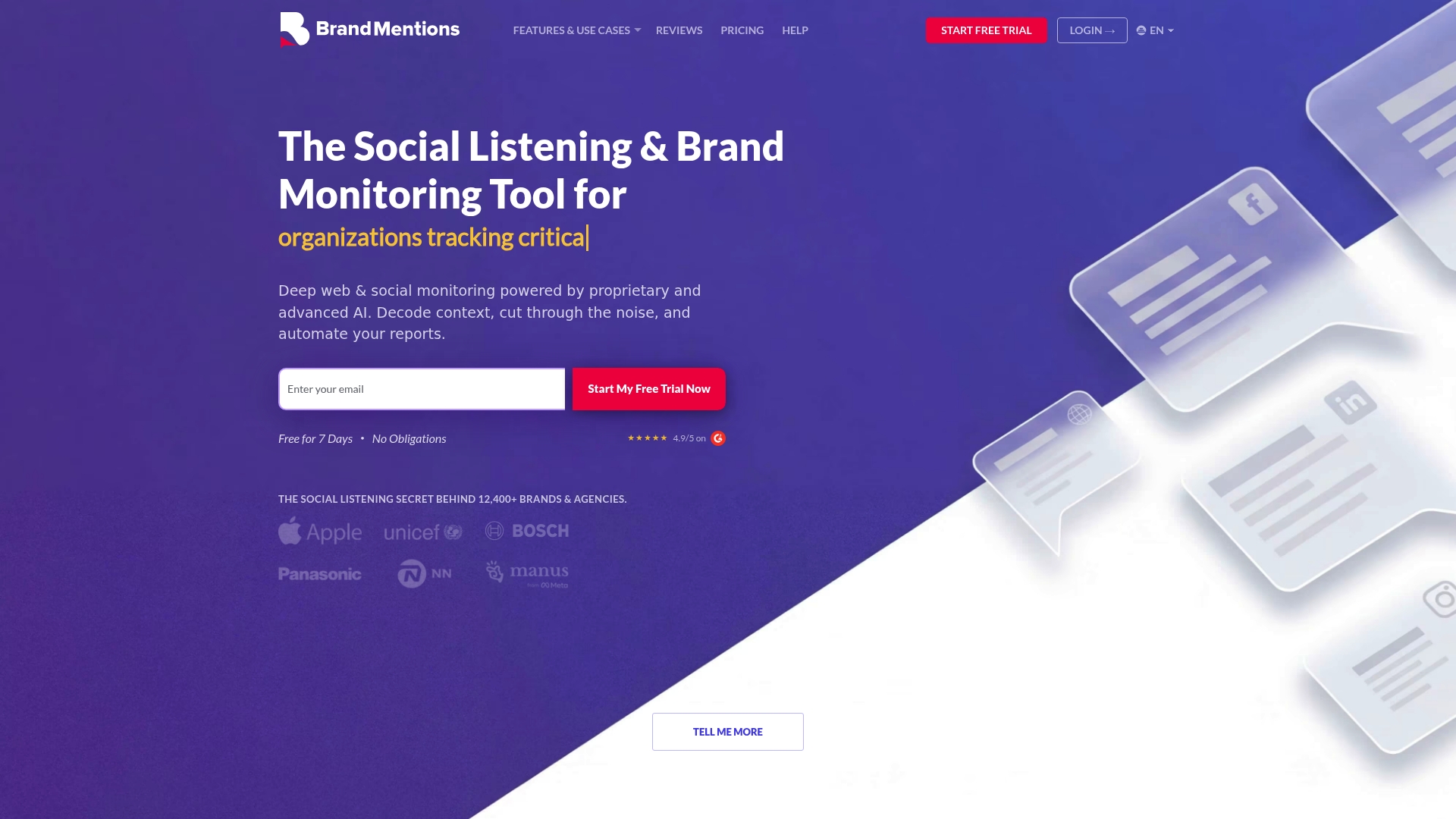
BrandMentions reports more than 10,738 companies use the service for brand and media monitoring. That user count shows the tool has traction among marketing teams and agencies. The platform offers real-time alerts and sentiment flags across social, news, blogs, and video sources.
Core Features
BrandMentions combines mention detection, sentiment analysis, and competitor spying into a single monitoring workspace. It issues real-time alerts and assembles business intelligence reports that tie mentions to trends and influencer activity. The feature set covers web and social signals and includes tools for media tracking and campaign measurement.
Key Differentiator
The vendor says BrandMentions applies AI to decode context and automate report generation, which aims to surface relevance rather than raw mention counts. That approach prioritizes mentions that matter to brand reputation and campaign outcomes. The automation reduces manual filtering for analysts.
Pros
BrandMentions delivers fast mention detection and broad coverage across social networks, news sites, blogs, and video platforms. The interface integrates into common marketing workflows and makes it easier to route alerts and follow up on issues. Teams praised the speed and depth of detection, and the reporting tools help measure campaign reach and reputation trends.
Cons
- Historical search depth is limited on lower-tier plans, so long-term trend work may require an upgrade.
- Smaller teams may face a learning curve because the platform packs many monitoring controls into its UI.
- Pricing tiers can strain small budgets when you need deeper archives or more seats.
- Mention accuracy varies by source and keyword specificity, which can require manual verification.
When It May Not Fit
If you need deep historical archives out of the box, BrandMentions may not meet that need on cheaper plans. Small startups with single-person marketing teams may find the platform more complex than necessary. Organizations on tight budgets will want to compare plan limits before committing.
Who It’s For
BrandMentions fits marketing teams, PR professionals, brand managers, and digital agencies that monitor reputation and campaign performance. It also suits teams that need quick alerts across many source types and that can invest time in tuning keywords. Agencies that manage multiple client brands will benefit most from its alerting and report features.
Real World Use Case
A marketing agency uses BrandMentions to track client mentions during product launches and crisis events. The team receives instant alerts for spikes in negative sentiment and identifies key amplifiers in social and news outlets. That lets the agency respond faster and measure the effectiveness of mitigation steps.
Pricing
BrandMentions offers a free seven day trial, and plan details vary by feature and archive depth. Pricing depends on the number of users, keywords, and historical access required. The vendor lists full pricing and plan comparisons on its site.
Website: https://brandmentions.com
Critical Mention
At a Glance
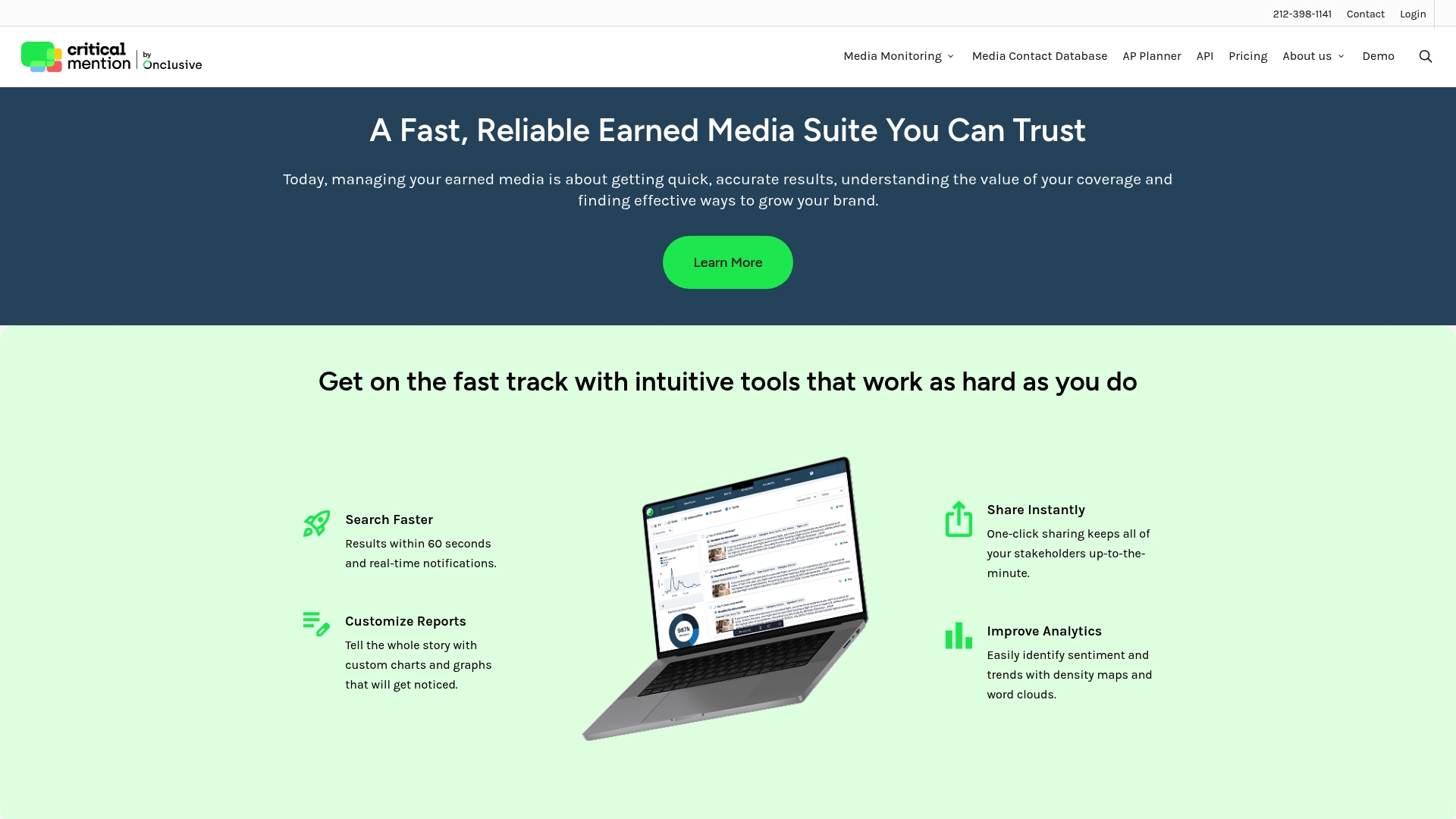
Real-time monitoring covers TV, radio, online news, social media, and podcasts. The platform pairs that coverage with instant alerts and clip previews for fast response. That scope aims to surface earned media across broadcast and digital channels in one place.
Core Features
Critical Mention provides real-time alerts, customizable dashboards, and sentiment and trend detection. Users can build tailored reports and share rich media clip previews directly from the interface. The product also includes a media contact database and an API for feeding mentions into analytics workflows.
Key Differentiator
The vendor positions Critical Mention around wide global media coverage and rapid alerts combined with built-in reporting and sharing. The product focuses on monitoring and earned media measurement rather than formal strategy work. That narrower focus suits teams that need minute by minute coverage and broadcast monitoring more than long term market strategy.
Pros
The interface returns results quickly and sends immediate notifications, which helps response-oriented PR teams. Coverage spans broadcast and online sources, so users do not need separate tools for TV clips and social mentions. Reporting and clip sharing simplify stakeholder updates, and customer support is cited as responsive for onboarding and troubleshooting.
Cons
- Pricing is not publicly listed, so budgets typically require a sales conversation. This creates friction for small teams that need transparent plans.
- The platform can feel complex for occasional users, which raises the learning curve for smaller communications teams.
- Advanced functions such as extended archive searches or broad API access may add incremental costs beyond the base service.
When It May Not Fit
Small organizations with a limited monitoring budget will likely find the sales consult model frustrating. Teams that need lightweight mention tracking rather than broadcast monitoring may prefer simpler tools. Organizations wanting a packaged strategy workflow or a strategy library will find Critical Mention narrower in scope.
Notable Integrations
The product exposes an API for custom data access and for piping mentions into analytics tools and reporting systems. That API enables exports to BI tools or in‑house dashboards for deeper analysis.
Who It’s For
Communications, PR, and marketing teams that require near real-time visibility into earned media are the primary users. Organizations with broadcast exposure needs, like universities, healthcare systems, and corporate communications, benefit most. The platform suits teams prepared to invest in a full monitoring service and training.
Real World Use Case
A corporate PR team uses Critical Mention to detect TV segments and online mentions as they air. The team receives alerts, clips the segment, and sends reports to executives within an hour. That workflow shortens response time and provides timestamped evidence for stakeholder reporting.
Pricing
Public pricing is not available. The vendor uses tailored quotes and a sales consultation model, and the listing suggests some advanced features may cost extra. Buyers should request a detailed quote and clarify archive and API fees before committing.
Website: https://criticalmention.com
Comparison of alternatives
Competitor eligibility:
- Excluded products (discontinued / inaccessible / under construction): none
- Usable competitors remaining: Determ, BrandMentions, Critical Mention
Intro pre-write:
- Does blueprysm.com clearly outpace every usable competitor on a single dimension? YES
- If YES: dimension where blueprysm.com wins — Security and strategic planning capabilities combined.
- First sentence draft: Blue Prysm stands out by integrating institutional-grade frameworks with AI-driven analysis, emphasizing data security and strategic clarity.
Competitor win pre-write:
- Which competitor wins which dimension: Determ wins quick alert setup because of its focus on immediate media coverage detection and reporting.
- Does this dimension matter to the primary reader? YES
Best Fit uniqueness check:
- List each bullet scenario in one clause: Established organizations prioritizing strategic clarity and security / Agencies needing immediate alerts and simple setup / Teams requiring broader archive access through flexible pricing.
- Can any two be swapped without changing meaning? NO
Our Pick pre-write:
- The ONE capability unique to blueprysm.com in this set: Institutional-grade frameworks for strategic clarity tied to AI-driven execution.
- Evidence from the reviews: “Blue Prysm includes formal strategy templates such as Porter’s Five Forces and Blue Ocean Strategy, plus modules to translate corporate vision into measurable OKRs and KPIs.”
- Closing sentence draft: Blue Prysm is best suited for leaders aiming to transition from informal ideas to institutional-grade, trackable strategies while maintaining stringent data security.
- Substitution test: Determ is best suited for leaders aiming to transition from informal ideas to institutional-grade, trackable strategies while maintaining stringent data security.
- Does the substituted version still work as a recommendation? NO
## Comparison of alternatives
Blue Prysm presents a compelling option in the landscape of media intelligence software by integrating advanced strategy frameworks with AI analysis and stringent security measures. Evaluating its capabilities alongside Determ, BrandMentions, and Critical Mention reveals unique tradeoffs that cater to varying organizational needs.
Strategic orientation versus media monitoring
Blue Prysm excels in offering institutional-grade strategic planning tools like Porter’s Five Forces and real-time market briefings that assist leaders in creating structured initiatives. This focus contrasts sharply with Determ, which provides fast detection and reporting of online mentions and sentiment analysis, alongside immediate alerts tailored for PR crises and dynamic media environments. While Determ supports rapid responses, Blue Prysm equips teams for long-term strategic clarity.
Support for diverse use cases
Critical Mention specializes in real-time monitoring of traditional and digital broadcast ecosystems with customizable dashboards and immediate notification systems, catering to teams focused on monitoring reputation across multiple media types. BrandMentions targets multi-channel coverage including video and blogs, supplying reports about campaign performance and influencer activity. However, Blue Prysm’s tools emphasize validating corporate strategies through Venture Quick Score and filtering overhyped claims via Puffery Detector—both targeting decision-makers who seek rigor in business initiatives.
Best fit
- Established organizations prioritizing strategic clarity and security should opt for Blue Prysm for its strategic planning templates and SOC 2 certified safeguards.
- Agencies needing immediate alerts with simple setup will find Determ appropriate due to its AI-generated summaries and instant reporting features.
- Teams seeking broader archive access through flexible pricing and tools for campaign influence detection are aligned with BrandMentions.
- Communications departments handling traditional media tracking and minute-by-minute coverage would benefit from Critical Mention’s real-time broadcast monitoring features.
Our pick
Blue Prysm is best suited for leaders aiming to transition from informal ideas to institutional-grade, trackable strategies while maintaining stringent data security. Its suite of strategic frameworks ensures disciplined workflows and documented metrics, forging a platform tailored to decision-makers seeking dependability in progressing their initiatives.
Identifying the right media intelligence platform depends on specific requirements such as strategy framework integration, pricing, and ease of use.
| Product | Core Feature | Key Differentiator | Best For | Pricing | Limitation |
|---|---|---|---|---|---|
| Blue Prysm | AI-driven business strategy analytics | Comprehensive frameworks for actionable plans | Business leaders, entrepreneurs | Free plan available | Steep learning curve for new users to formal frameworks |
| Determ | Real-time media monitoring and reporting | AI-generated summaries with alerts | PR, communications teams | Price not published | Configuration complexity for initial setup |
| BrandMentions | Mention detection across media channels | AI for relevance filtering and report automation | Marketing teams, digital agencies | Price not published | Historical search depth limited on lower-cost plans |
| Critical Mention | Real-time broadcast and online monitoring | Global earned media coverage with alerts | PR, marketing for large organizations | Price not published | Requires tailored quote; additional features may add cost |
How Can Business Leaders Overcome Challenges with Meltwater.com Alternatives?
Companies looking for market insight tools face two major obstacles: getting strategic clarity and ensuring data security. Many platforms overwhelm users with raw data or lack practical ways to convert ideas into tracked plans. Blue Prysm tackles these issues by combining structured frameworks with AI-powered analysis. This helps entrepreneurs and executives go beyond vague concepts to develop measurable OKRs and monitor competitor moves securely. Users report significant savings and clearer operational focus using Blue Prysm’s strategy library and real-time market briefings.
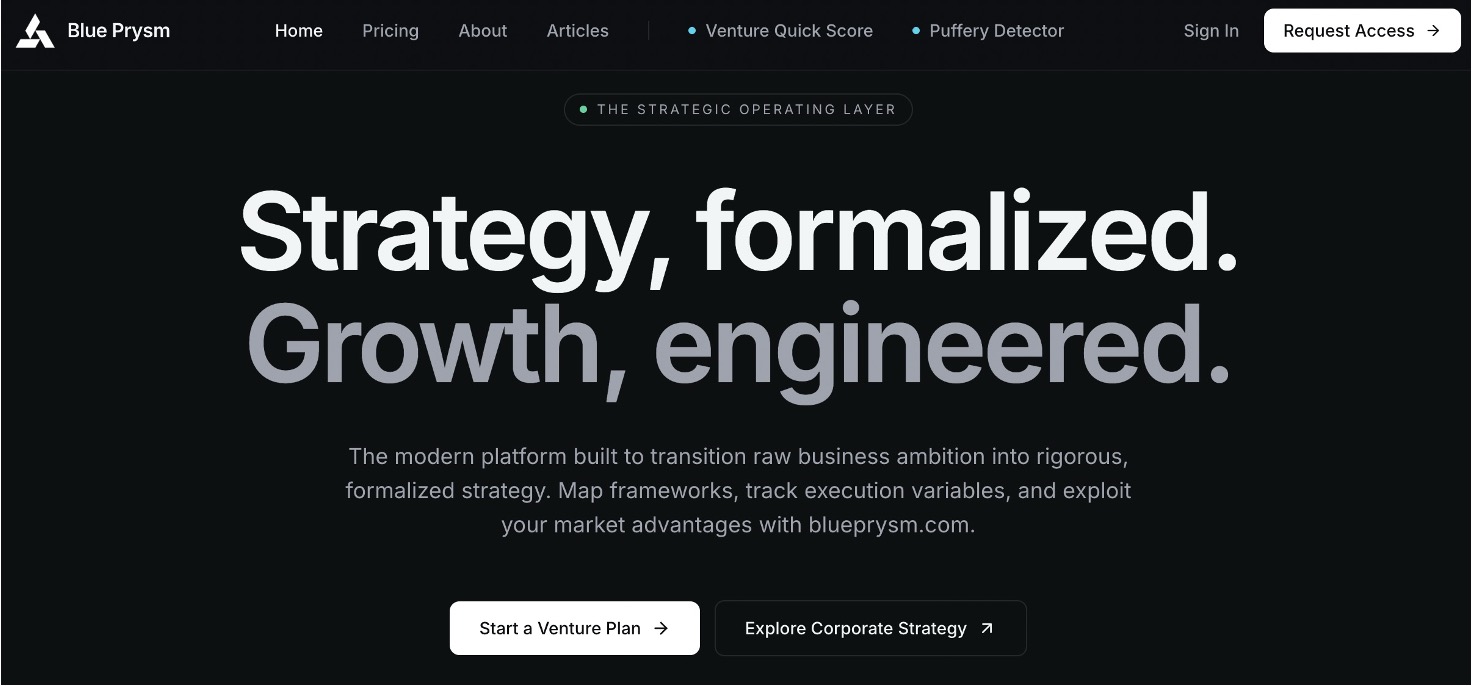
If you want to move from fuzzy assumptions to documented plans with AI assistance, visit blueprysm.com to try core features free. Evaluate how AI-driven scoring and credibility checks like the Puffery Detector sharpen decision-making and reduce time wasted on weak leads.
FAQ
What specific strategy frameworks does Blue Prysm offer?
Blue Prysm includes formal strategy templates such as Porter’s Five Forces and Blue Ocean Strategy. These frameworks help teams translate their corporate vision into measurable OKRs and KPIs. Consider using these templates to formalize your strategy effectively.
How does Blue Prysm compare to Determ in terms of media monitoring capabilities?
Determ offers continuous media monitoring and AI-generated summaries, allowing teams to quickly identify emerging issues and route the right items to stakeholders. Blue Prysm, while focused on strategy execution, excels in combining institutional-grade frameworks with AI-driven analytics, making it ideal for organizations that need structured strategy tracking instead of pure monitoring.
What is the Puffery Detector feature in Blue Prysm?
The Puffery Detector checks the credibility of web claims, helping teams filter weak claims and triage new ideas early. This feature is crucial for ensuring the integrity of information that influences strategic decisions. Use it to assess new initiatives before committing resources.
What are the learning challenges with Blue Prysm?
There is a steep learning curve for teams new to formal strategy frameworks or AI-based assessments. While training can improve effectiveness, it may add initial overhead. Be prepared to invest in onboarding to maximize your use of the platform.
Who can benefit most from using Blue Prysm?
Business leaders, entrepreneurs, and executives looking for a disciplined way to craft and track strategy will benefit the most. Organizations already utilizing formal frameworks or adopting OKR-based tracking will find significant value in Blue Prysm’s offerings.