

TL;DR:
- Industry monitoring tools collect external data and analyze it to inform strategic decisions. AI-driven platforms provide real-time alerts, filtering noise and offering contextual insights across news, patents, social media, and competitor websites. Successful strategies involve layering multiple tools, defining clear questions, and integrating alerts into workflows to avoid information overload and maximize value.
Industry monitoring tools are defined as software platforms that collect, filter, and analyze data from external sources to give business professionals timely intelligence for strategic decisions. The best examples of industry monitoring tools combine real-time data collection, AI-driven analysis, and customizable alerts to replace gut-feel decisions with evidence. These platforms pull from news feeds, patent databases, social media, regulatory filings, and competitor websites. The result is a shift from reactive firefighting to proactive positioning. If you are making market decisions without this kind of infrastructure, you are flying blind.
1. Examples of industry monitoring tools: AI-driven competitor trackers

AI-native competitor monitoring platforms track specific web pages and fire alerts when something changes. Pricing pages, product changelogs, job postings, and press releases are all fair game. Check frequencies range from 1 minute to 3 hours, with alerts reaching teams in under 5 minutes on critical updates. That speed matters when a competitor drops prices on a Friday afternoon and your sales team needs a response before Monday.
The best platforms in this category let you set up tracking in plain English. You describe what you want to watch, and the AI handles the technical configuration. Key features to look for include:
- Page change detection with visual diffs
- Customizable alert thresholds by page type
- Digest summaries for lower-priority changes
- Export to battle cards or CRM systems
Pro Tip: Set 1-minute checks only for mission-critical pages like competitor pricing. Use daily digests for everything else. This keeps your team focused without drowning in notifications.
2. Enterprise news and media monitoring platforms
Enterprise platforms monitor over 100,000 sources globally across 235+ regions and 80+ languages, with alert latencies as low as 200 milliseconds. That kind of coverage means a regulatory announcement in Brussels or a product recall in Seoul reaches your team before it hits mainstream business press. The speed advantage is real and measurable.
These platforms go beyond headline aggregation. Natural language processing (NLP) drives sentiment scoring, trend detection, and topic clustering. Your communications team sees brand reputation data. Your strategy team sees competitive moves. Your legal team sees regulatory risk. One platform, multiple dashboards, each tuned to a different function.
Key capabilities that separate enterprise-grade platforms from basic news feeds include:
- NLP sentiment analysis with trend forecasting
- Boolean and semantic search to filter noise
- Custom dashboards per business unit
- Integration with BI tools and collaboration platforms like Slack or Microsoft Teams
Industry experts consistently emphasize moving beyond raw headlines to deliver intelligence that each business function can actually use. Raw data is not intelligence. Filtered, contextualized, and routed data is.
3. Innovation and patent monitoring tools
Innovation monitoring platforms aggregate data from 78 million patent records and 229 million publications to deliver entity-level competitive intelligence. That scale makes it possible to track not just what competitors are filing, but which researchers they are hiring, which startups they are funding, and which regulatory approvals they are pursuing. This is forward-looking intelligence, not a rearview mirror.
These tools are built for technology scouting and R&D teams. They monitor patent databases, clinical trials, academic grants, and conference proceedings. Alerts fire only when a relevant change occurs, which keeps noise low. Use cases include:
- Tracking competitor patent activity by technology domain
- Identifying academic-to-commercial transitions before they become products
- Monitoring startup activity in adjacent markets
- Flagging regulatory submissions that signal a competitor’s next move
The best platforms customize monitoring profiles per client. A medical device company watches FDA submissions and clinical trial registrations. A software firm watches patent filings and open-source repository activity. The tool adapts to the intelligence question, not the other way around.
4. Social listening and brand health monitoring
Social listening tools track brand mentions, sentiment, share of voice, and emerging trends across millions of diverse sources including social media, blogs, forums, reviews, and podcasts. The breadth matters. A product complaint that starts on a niche Reddit thread can become a mainstream news story within 48 hours. Catching it early gives you time to respond, not just react.
AI analytics in this category have matured significantly. Platforms now detect sentiment shifts before they become crises, identify micro-trends before they go mainstream, and map share of voice against competitors over time. Marketing teams use this data to refine messaging. Customer success teams use it to catch dissatisfaction early.
Brands need to monitor broad source sets to measure brand health accurately. Limiting monitoring to Twitter and LinkedIn misses the conversations happening on forums, review sites, and video platforms where purchase decisions actually form.
Pro Tip: Connect your social listening data to your competitive intelligence workflow. A spike in negative sentiment about a competitor is a sales opportunity. Most teams treat these as separate functions when they should be one feed.
5. Choosing the right market analysis tools
The biggest mistake decision-makers make is buying one platform and expecting it to do everything. Successful monitoring strategies layer multiple tools: one for broad macro trends and others for focused entity-level insights like patents or regulatory filings. Think of it as a stack, not a single solution.
Here is a practical framework for building that stack:
- Define your intelligence questions first. “What is my competitor doing?” is different from “What is emerging in my industry?” Each question needs a different tool.
- Match source depth to your need. Broad news monitoring covers macro trends. Patent tools cover technology signals. Social listening covers consumer sentiment.
- Prioritize API and webhook integration. Manual export models create bottlenecks in fast-paced decision environments. Alerts need to land in Slack or your CRM automatically.
- Budget realistically. Enterprise SaaS solutions cost from $5,000 to $50,000 per year per topic. Smaller API or scraper-based options offer pay-per-result pricing for tighter budgets.
- Tune your alert cadence. Optimizing alert frequency prevents alert fatigue. Use minute-level checks for critical updates and daily digests for broader industry news.
Pro Tip: Run a two-week audit before buying any platform. Log every intelligence question your team asks and which ones go unanswered. That gap list is your buying criteria.
Tracking AI chatbot recommendations is also becoming a legitimate monitoring category. Brands should now watch how AI-driven search tools like ChatGPT and Perplexity describe them, since consumers increasingly use these tools to make purchase decisions. Understanding AI search visibility is no longer optional for competitive intelligence teams.
Key Takeaways
The most effective industry monitoring strategy layers AI-driven competitor tracking, enterprise news platforms, patent intelligence, and social listening into a single integrated workflow.
| Point | Details |
|---|---|
| Layer your tools | Use separate tools for macro news, competitor tracking, patents, and social listening for full coverage. |
| Tune alert cadence | Set minute-level checks for critical pages and daily digests for broader industry signals to reduce fatigue. |
| Prioritize integration | Connect monitoring tools to Slack, CRM, or BI platforms via API so alerts are immediately usable. |
| Budget by scope | Enterprise platforms cost $5,000–$50,000 per year; scraper-based options suit smaller budgets. |
| Watch AI search | Monitor how AI chatbots describe your brand, since this is now a measurable dimension of competitive intelligence. |
The monitoring trap most teams fall into
I have watched smart strategy teams spend months evaluating platforms and then deploy them in a way that produces exactly the problem they were trying to solve: information overload. The tool is not the issue. The workflow is.
The shift from reactive to proactive intelligence does not happen because you bought a better platform. It happens when you define a clear intelligence question before you configure a single alert. Most teams skip that step. They set up broad keyword monitoring, get flooded with noise, and declare the tool useless within 90 days.
The teams that get real value from AI-driven monitoring treat it like a reporting function, not a notification system. They assign ownership, set a weekly review cadence, and connect findings directly to decisions. One insight that changes a pricing call or a product roadmap justifies the entire annual cost of the platform.
The emerging frontier worth watching is AI model mention tracking. Competitive intelligence now includes monitoring how AI chatbots recommend brands, which introduces a dimension that most teams are not measuring yet. The companies that build this into their monitoring stack now will have a real advantage in 12 months.
— Colin Bowdery
How Blue Prysm brings this all together
Blue Prysm gives small and mid-sized businesses access to the same caliber of competitive intelligence that large enterprises pay consulting firms to produce.
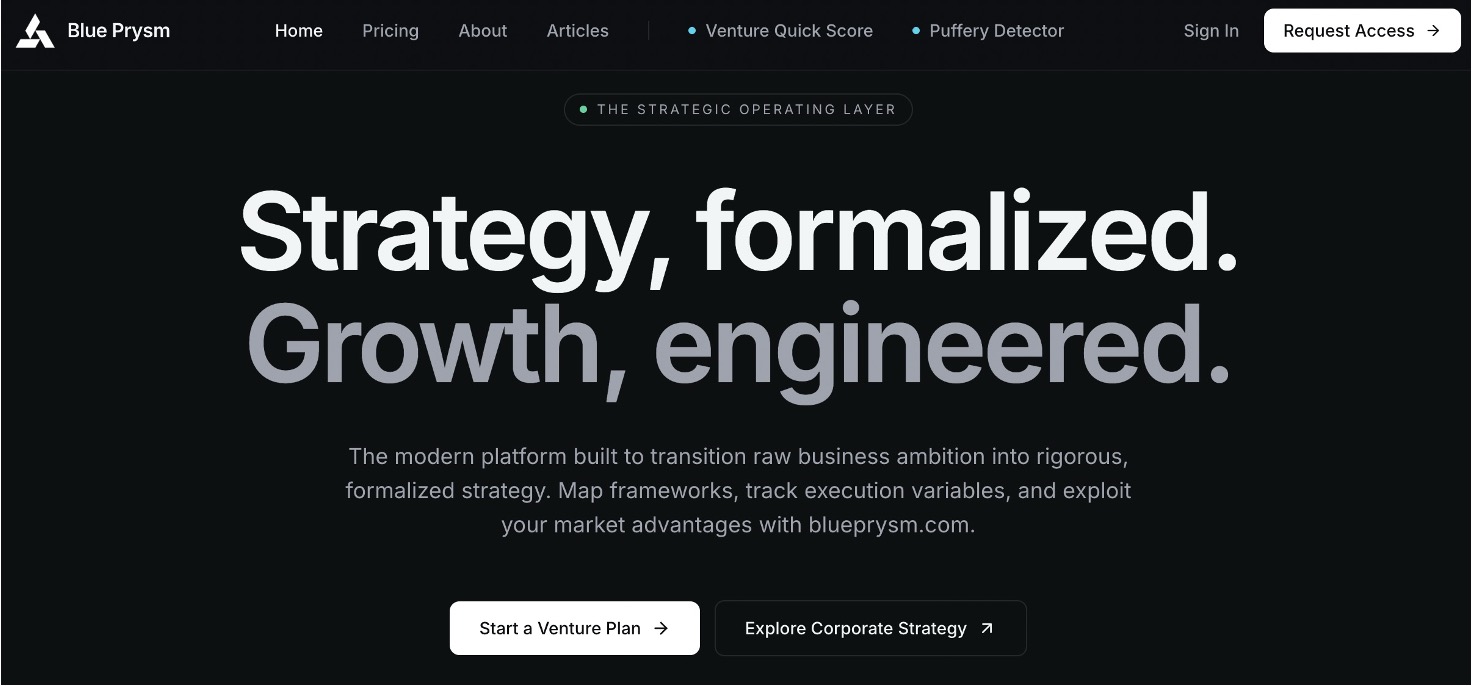
The platform combines real-time market briefings, competitor monitoring software, and a strategy library built around frameworks like SWOT, Porter’s Five Forces, and the Business Model Canvas. You get alerts that are filtered and contextualized, not raw data dumps. Blue Prysm’s market analysis platform integrates directly into your decision workflow, so intelligence reaches the right person at the right time. For teams that have been relying on manual research or expensive consultants, the cost difference is significant and the speed advantage is immediate.
FAQ
What are industry monitoring tools?
Industry monitoring tools are software platforms that collect and analyze data from external sources, including news, patents, social media, and competitor websites, to support strategic business decisions.
How do AI-driven monitoring tools differ from basic news alerts?
AI-driven tools apply NLP and machine learning to filter noise, detect sentiment shifts, and deliver contextualized intelligence, while basic news alerts simply aggregate headlines without analysis.
How much do industry monitoring platforms cost?
Costs range widely. Enterprise SaaS platforms run from $5,000 to $50,000 per year per topic, while entry-level API and scraper-based tools offer pay-per-result pricing for smaller budgets.
What is alert fatigue and how do you avoid it?
Alert fatigue occurs when too many notifications reduce a team’s ability to act on critical signals. Setting minute-level checks only for high-priority pages and using daily digests for broader news prevents it.
Why should businesses monitor AI chatbot recommendations?
AI chatbots like ChatGPT and Perplexity increasingly influence purchase decisions. Tracking how these tools describe your brand is now a measurable part of competitive intelligence and brand health monitoring.