


TL;DR:
- Focusing on a five-stage lead flow linked to revenue metrics helps teams qualify leads quickly and improve conversion rates. Responding within five minutes after a form submission significantly increases the likelihood of converting leads into customers. Blue Prysm’s market analysis and intelligence tools enable SMBs to identify in-market segments and allocate marketing spend effectively.
The only marketing leads worth chasing are the ones your team can qualify fast, follow up on immediately, and move through a five-stage flow (Attract → Capture → Qualify → Nurture → Convert) tied to revenue metrics, not raw volume.
Here is where to start right now:
- Implement the five-stage flow and assign a single owner to each stage.
- Set ROI-linked KPIs (lead-to-customer rate, cost per customer, revenue per lead by source) and drop vanity metrics.
- Enable AI-assisted lead scoring to surface behavioral signals before your sales team picks up the phone.
- Launch a 30-day sprint with a defined budget, two to three channels, and a clear decision gate.
The number that should keep you up at night: 80% of new leads never convert. That is not a pipeline problem. It is a qualification and follow-up problem. Fix those two things first, and volume becomes secondary.
Blue Prysm’s market-analysis platform is built to accelerate exactly this kind of ROI-focused qualification. And before you run any outbound sequence, confirm your email practices comply with CAN-SPAM and that any EU contacts are covered under GDPR consent rules.
What does the five-stage lead flow actually look like?
The Attract → Capture → Qualify → Nurture → Convert framework works because it forces you to define a measurable outcome at every stage, not just at the close.
- Attract: Drive the right traffic via SEO, paid search on buyer-intent keywords, and LinkedIn content. Metric: qualified sessions and new contact rate.
- Capture: Convert visitors with dedicated landing pages and live chat. Dedicated landing pages convert at a notably higher rate on average than general pages. Metric: form submission rate.
- Qualify: Score leads using behavioral signals (pricing-page visits, case-study downloads) and firmographic filters. Metric: MQL volume and MQL-to-SQL conversion rate.
- Nurture: Run automated email sequences and retargeting ads to keep warm leads engaged. Metric: email open-to-click rate and re-engagement rate.
- Convert: Sales executes a defined play within an agreed SLA. Metric: SQL-to-close rate and average deal velocity.
Pro Tip: The most common failure point is the gap between Capture and Qualify. A lead fills out a form and waits 48 hours for a response. Responding within five minutes increases conversion materially versus waiting even an hour. Automate an immediate welcome email, an SDR alert, and a chat follow-up the moment a form is submitted.
Which channels should you run now vs. build over time?
Not all channels pay off on the same timeline. The trap is spending 90 days on SEO when you need pipeline in 30.

| Channel | Timeline | Lead Quality | Cost Shape |
|---|---|---|---|
| Targeted outbound (email/LinkedIn) | — | Medium | Fixed per seat |
| Paid search (buyer-intent keywords) | — | High | Variable (CPC) |
| Referral activation | — | Very high | Near zero |
| Gated content + email nurture | 30–90 days | Medium-high | Content production |
| SEO / decision-stage content | 90+ days | Highest (compounding) | Time + production |
| Webinars / virtual events | 30–60 days | High | Hosting + promotion |
Bottom-funnel, decision-stage content converts 5–10x better than awareness content for purchase intent, which is why SEO investment should target those keywords specifically, not just traffic volume.
- Weeks 1–2: Activate referrals from your most satisfied customers. Ask directly. It costs nothing and produces your highest quality leads.
- Weeks 2–4: Launch a paid search campaign targeting buyer-intent keywords with dedicated landing pages.
- Month 2: Gate one high-value asset (a guide, template, or benchmark report) and build a five-email nurture sequence behind it.
- Month 3: Evaluate SEO gaps on decision-stage keywords and assign a content owner.
For outbound execution at scale, a B2B pipeline partner can compress the ramp time on prospecting sequences significantly.
What KPIs actually tell you if lead generation is working?
Swap your dashboard from lead volume to these revenue-proximate metrics.
| Metric | Review Cadence | Owner |
|---|---|---|
| Lead-to-opportunity rate | Weekly | Marketing |
| MQL-to-SQL velocity (days) | Weekly | Marketing + Sales |
| Lead-to-customer conversion rate | Monthly | Revenue/GTM lead |
| Cost per customer by channel | Monthly | Marketing |
| Revenue per lead by source | Monthly | Revenue/GTM lead |
- First-touch attribution works when you are early-stage and need to know which channels create awareness.
- Last-touch attribution is useful for identifying what closes deals, but it over-credits bottom-funnel ads.
- Simple multi-touch (equal weight across two to three touchpoints) is the practical choice for most SMBs. It avoids the complexity of data-driven models while still surfacing channel contribution.
Basic hygiene: use UTM parameters on every campaign link, connect your ad platforms to your CRM, and set up a conversion goal in Google Analytics 4 for every form submission. Without this plumbing, your attribution data is guesswork.
How do you qualify leads so sales focuses on the right ones?
Marketing-qualified leads (MQLs) and sales-qualified leads (SQLs) are distinct, and conflating them is one of the fastest ways to burn out a sales team. An MQL has engaged with your content and needs nurturing. An SQL has been vetted, shows buying intent, and is ready for a direct conversation.
Sample lead scorecard:
| Signal | Points |
|---|---|
| Case study download | +10 |
| Company size 50 employees | +10 |
| Two or more return visits | +10 |
| Unsubscribed from email | –20 |
A score of 40+ triggers an MQL flag. A score of 60+ with a confirmed budget signal triggers SQL handoff.
SLA quick-rules:
- Sales contacts every SQL within four business hours of handoff.
- Marketing passes lead context (pages visited, content downloaded, score) with every handoff, not just the contact record.
- If an SQL goes cold after two touches, it returns to a nurture sequence automatically.
Behavioral signals like pricing-page visits and case-study downloads are the strongest purchase predictors. Weight them higher than demographic data alone.
What tech stack do you actually need for predictable lead flow?
You do not need 14 tools. You need the right five categories integrated cleanly.
| Category | Role in the Five-Stage Flow | Key Integration |
|---|---|---|
| CRM | Central lead record, pipeline tracking | All other tools feed into it |
| Marketing automation | Nurture sequences, scoring, alerts | CRM, landing pages |
| Analytics (GA4 + UTMs) | Attribution, conversion tracking | Ad platforms, CRM |
| Chat / engagement | Capture and instant qualification | CRM, automation |
| Market analysis / competitive intelligence (AI) | Channel allocation, intent signals, messaging | Strategy and content teams |
Data hygiene checklist:
- Single source of truth: every lead lives in the CRM, not in spreadsheets.
- Deduplicate contacts monthly.
- Tag consent status (CAN-SPAM opt-in, GDPR consent) on every record. See Blue Prysm’s data security guidance for a compliance-ready framework.
- Sync ad platform audiences from CRM segments, not manual lists.
Pro Tip: AI-powered lead scoring improves conversion prediction by reading behavioral patterns across sessions, not just single-event triggers. For SMBs, the highest ROI from AI comes from three places: scoring, intent signal detection, and content personalization. Avoid overfitting to short-term spikes (a single pricing-page visit from a student researcher, for example). Validate AI outputs against closed-won data quarterly. An AI-driven lead capture architecture can also inform how you structure your capture and routing logic.
Your 30/90-day lead generation roadmap
| Milestone | Owner | Measurable Outcome | Sample Budget |
|---|---|---|---|
| Days 1–14: Audit and instrument | Marketing/Ops | UTMs live, CRM connected, baseline KPIs set | — |
| — | Marketing | Referral asks sent, one paid campaign live, landing page live | — |
| — | Marketing | Gated asset published, five-email sequence live, scoring active | — |
| — | GTM lead | Two channels scaled, one killed, MQL-to-SQL rate improving | $2,000 (scaled spend) |
- Assign one owner per milestone before the sprint starts. Shared ownership means no ownership.
- Set a decision gate at Day 30: if cost per MQL exceeds your target by more than 50%, pause that channel and reallocate.
- Review the scorecard weekly in Days 1–30, then bi-weekly after the nurture engine is live.
Use Blue Prysm’s strategy library to pull a GTM framework template and map your sprint milestones against it. The ideas validation guide is also worth reading before you commit budget to any new channel.
How does AI-powered market analysis change lead generation?
Most SMBs use AI for content drafting. The teams pulling ahead use it for something more valuable: understanding which segments are actually in-market and why their current messaging is missing them.
Blue Prysm’s platform gives strategy and marketing teams:
- Real-time market analysis to identify which segments are growing and where buyer intent is concentrating.
- Automated competitive intelligence briefings that surface competitor messaging shifts before they affect your pipeline.
- A 50+ template strategy library that includes GTM frameworks, ICP definitions, and channel-mix models.
- OKR and KPI dashboards to track lead-gen milestones against business objectives in one view.
A practical example: a professional services firm using Blue Prysm’s competitive intelligence tools identified that a competitor had pulled back on LinkedIn content in a specific vertical. They shifted 20% of their content budget to that vertical, built two decision-stage assets targeting it, and saw their MQL-to-SQL rate in that segment improve within 60 days. No gut feeling. Just signal.
The caution: AI surfaces patterns, but humans still need to validate them. Keep a human in the loop on any scoring or channel-allocation change driven by AI output, and audit your model against closed-won data at least quarterly.
Pro Tip: Use Blue Prysm’s market insights platform to run a segment-level demand analysis before you finalize your 30-day channel mix. Spending $2,000 on ads in a segment with declining intent is a fast way to miss your pipeline target.
Key Takeaways
The single most important shift in lead generation for 2026 is moving from volume-chasing to a qualified, ROI-tracked five-stage flow where fast follow-up and AI-assisted scoring determine who sales actually calls.
| Point | Details |
|---|---|
| 80% of leads never convert | Qualification and follow-up matter more than raw lead volume. |
| Five-stage flow is the operating model | Assign owners and metrics to each of Attract, Capture, Qualify, Nurture, and Convert. |
| Respond within five minutes | Automated immediate follow-up after form submission is the single highest-leverage SLA fix. |
| Track revenue-linked KPIs | Lead-to-customer rate and cost per customer beat total lead count every time. |
| Blue Prysm accelerates qualification | Use its market analysis and competitive intelligence to focus spend on in-market segments before the sprint starts. |
Why ROI-focused lead strategy is the only strategy worth running in 2026
There is a version of lead generation that feels productive. You run ads, leads come in, the dashboard looks busy. And then the quarter ends and the pipeline is thin. That is the volume trap, and it is more common than most founders want to admit.
The shift that actually moves the needle is treating lead generation as a system with defined stages, owners, and revenue-linked metrics, not as a collection of tactics you run in parallel and hope for the best. Intent data has matured enough that you can now identify which companies are actively evaluating solutions like yours before they ever fill out a form. LinkedIn organic content, when targeted at a specific ICP rather than broadcast to everyone, produces lead quality that paid campaigns rarely match at the same cost. These are not theoretical trends. They are the levers that separate the SMBs building durable pipelines from the ones perpetually resetting at zero.
The 30/90-day roadmap in this guide is not a magic formula. It is a forcing function. It makes you assign owners, set thresholds, and make explicit decisions about what to scale and what to kill. That discipline, more than any single tactic or tool, is what compounds over time.
Blue Prysm gives your lead strategy a real intelligence advantage
Most lead generation playbooks tell you what to do. Blue Prysm tells you where to focus first, based on what the market is actually doing right now.
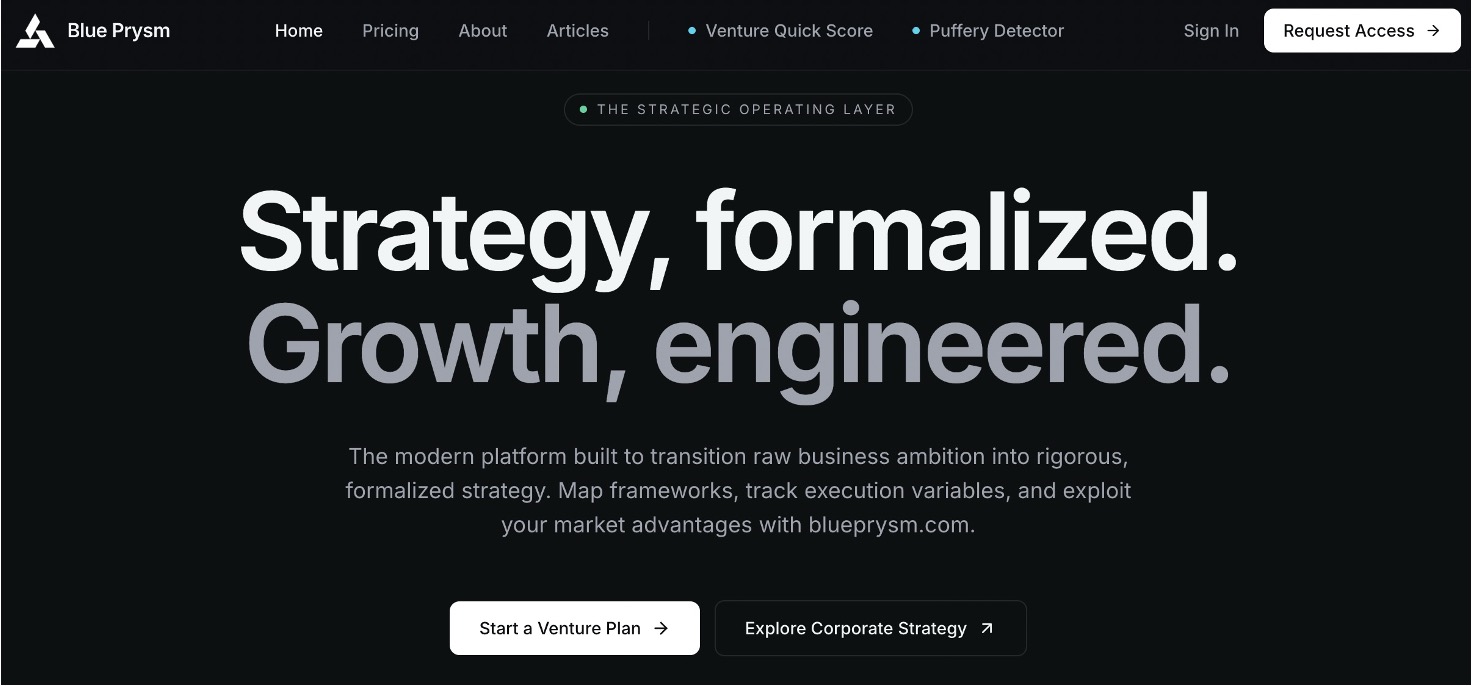
Blue Prysm’s market research tools and real-time market analysis platform give SMB strategy and marketing teams the segment-level demand data, competitive signals, and GTM frameworks they need to run a 30/90-day lead sprint with confidence, not guesswork. You get automated competitive briefings, a 50+ template strategy library, and OKR dashboards that keep your team aligned from sprint kickoff to close.
Blue Prysm speeds insight and qualification. It does not replace process, ownership, or measurement. Those still require you. But if you are about to commit budget to a channel mix without knowing where buyer intent is actually concentrating, that is a costly gap to leave open.
Book a demo at blueprysm.com/market-analysis-platform and map your first 30-day sprint using real market data.
Useful sources and starting points
- Blue Prysm Market Research Tools: Start here if you need to validate your ICP and channel mix before committing sprint budget.
- Blue Prysm Competitive Intelligence: Use this to track competitor messaging shifts and identify underserved segments.
- How to Build High-Performing Marketing Teams in 2026: Practical guidance on assigning owners and setting up measurement for the roadmap milestones.
- Data-Driven Strategy Examples for SMEs: Real-world examples of how market analysis changed channel allocation and improved lead quality.
- Salesforce: Lead Generation Tips for Small Business: Solid primer on automating immediate follow-up and building referral engines.
FAQ
What are marketing leads and why do most of them not convert?
Marketing leads are individuals or organizations that have shown interest in your product or service and entered your marketing reach. 80% never convert because most businesses capture contact information without qualifying intent or following up fast enough.
What is the difference between an MQL and an SQL?
An MQL has engaged with your marketing content but needs further nurturing before a sales conversation. An SQL has been vetted, shows clear buying intent, and is ready for direct sales engagement. The handoff between the two requires defined scoring thresholds and context transfer, not just a contact record.
How quickly should you follow up with a new lead?
Within five minutes of a form submission. Waiting even an hour materially reduces conversion rates. Automate an immediate email, an SDR alert, and a chat response to close that gap without relying on manual speed.
Which lead generation channels produce the highest-quality leads for SMBs?
Referrals consistently produce the highest-quality leads at the lowest cost. Paid search on buyer-intent keywords and decision-stage content (targeting bottom-funnel keywords) follow closely. Combining three to four complementary channels protects your pipeline when one underperforms.
How does Blue Prysm help with lead generation?
Blue Prysm’s market analysis and competitive intelligence tools help SMBs identify which segments have active buying intent, where competitors are pulling back, and which messaging angles are gaining traction, so marketing teams can allocate budget to the highest-ROI channels before the sprint starts.